
Baklava guide
A small baklava guide
Fourteen varieties, four families, one origin: Gaziantep. Here we tell you where each variety comes from, what makes it special and how to enjoy it.
Baklava is not one pastry but a whole family. Cut from the tray, rolled, made from fine pastry threads, with pistachio or with walnut: each form has its own story and its own moment at the table.
This guide takes you through our range the way a pastry shop in Gaziantep would explain it: with the Turkish names, what they mean and a few words on when to eat which.
Chapter I
From the tray
Pastries made of many paper-thin layers were known across the Orient for a long time. Baklava took its present form in the Ottoman palace kitchens of Istanbul, where pastry chefs rolled the dough ever thinner.
In Gaziantep it became a craft of its own: pistachios from the region, clarified butter, sugar syrup and yufka rolled so thin you could read a newspaper through a sheet. Ours has 40 layers per tray. Since 2015 the city has been part of the UNESCO Creative Cities network for gastronomy.
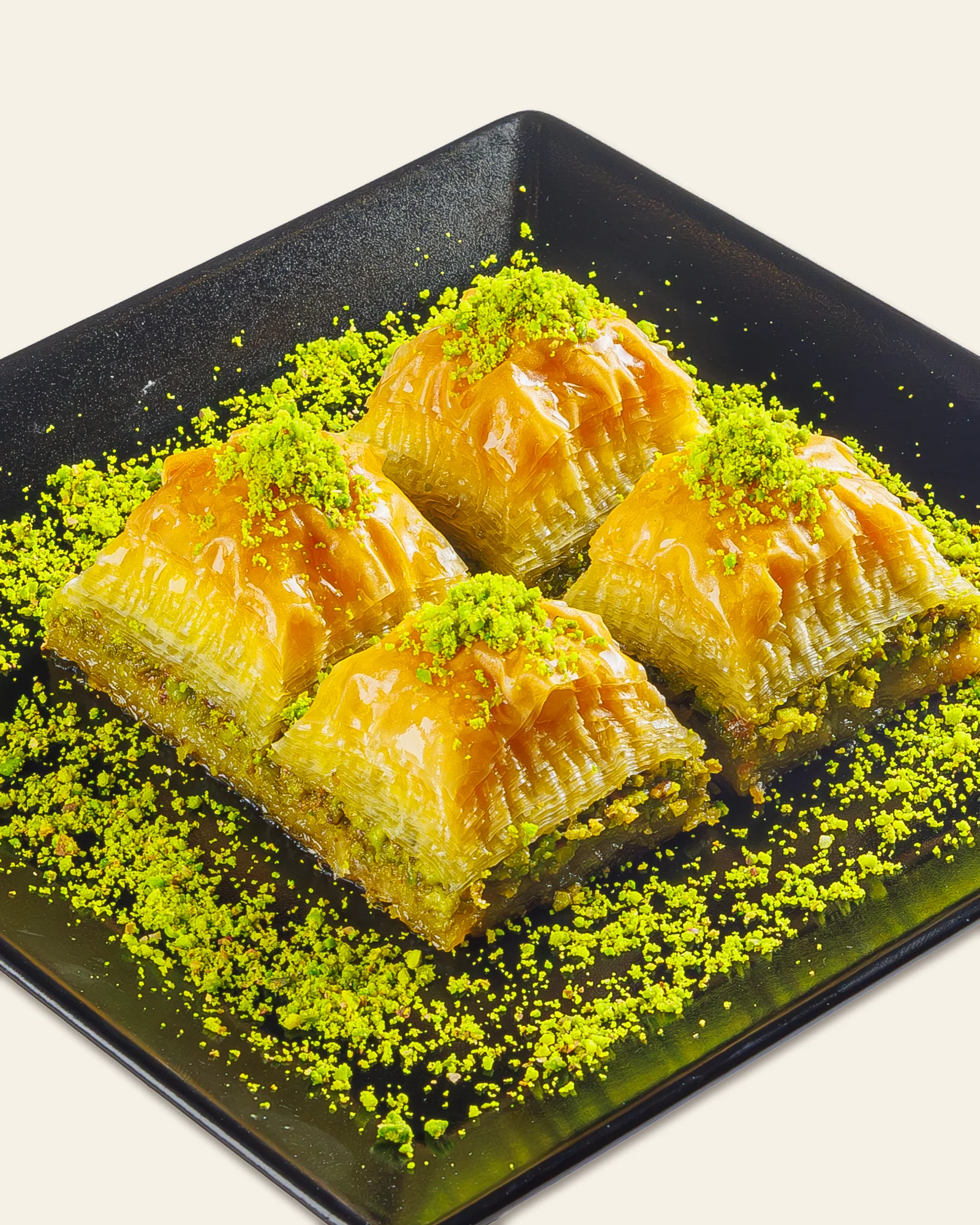
Fıstıklı · the classic
Baklava with Pistachios
Order “baklava” in Gaziantep and this is what you get: generously cut pieces filled with first-grade Boz pistachios under golden, crisp layers. It is the benchmark every baklava maker is measured against.
Listen for the sound: good baklava crackles when you bite into it, and the base is moist but not soggy.
Our tip: Enjoy at room temperature with a glass of Turkish tea.
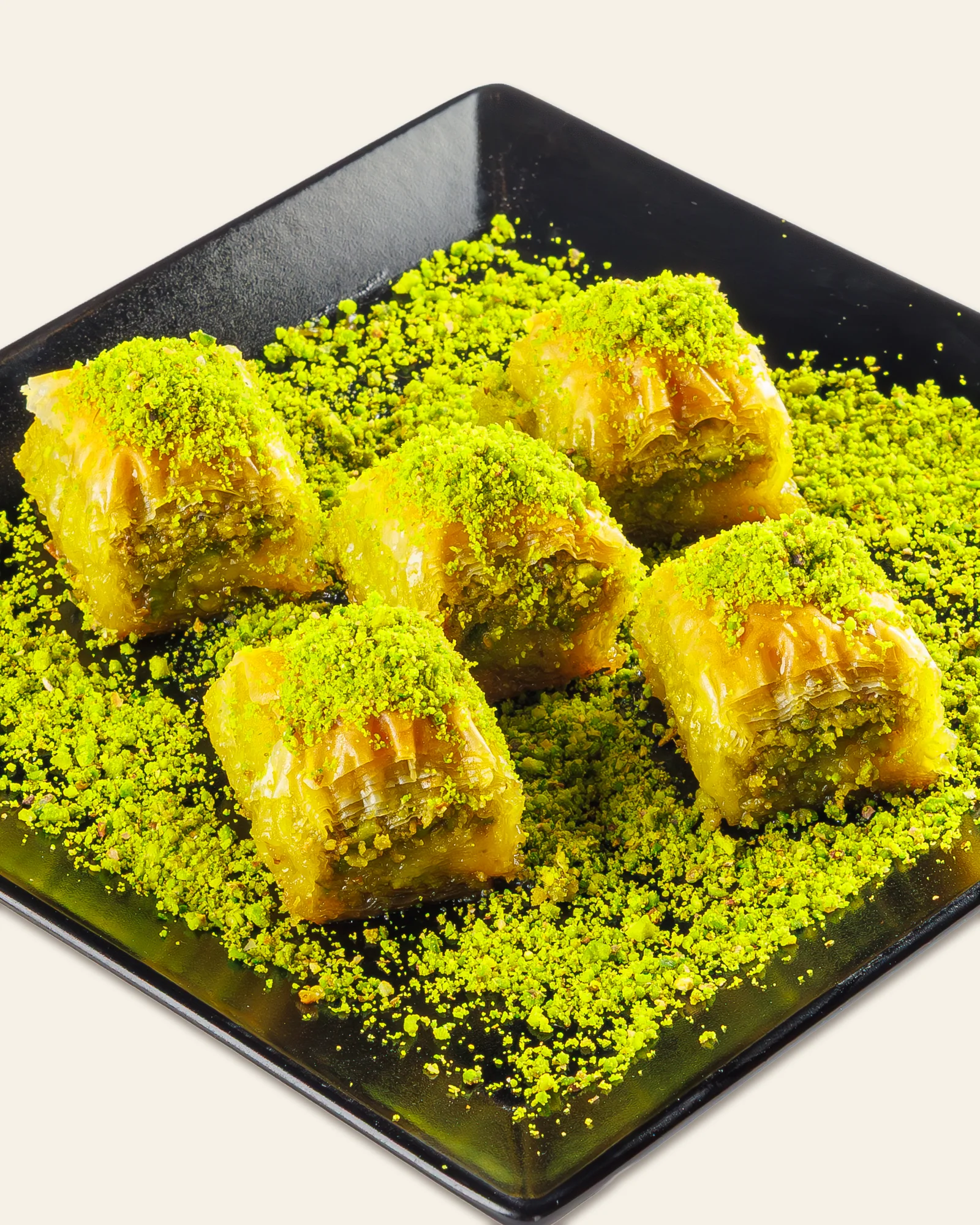
Özel · the fine one
Special Baklava with Pistachios
Özel means “special”. The filling is the same as the classic, but the pieces are cut smaller and narrower, so every bite has more pistachio and less dough.
In Gaziantep this is the variety for guests and holidays: one piece is exactly one bite.
Our tip: Ideal for a mixed platter, because the small pieces sit well next to other varieties.
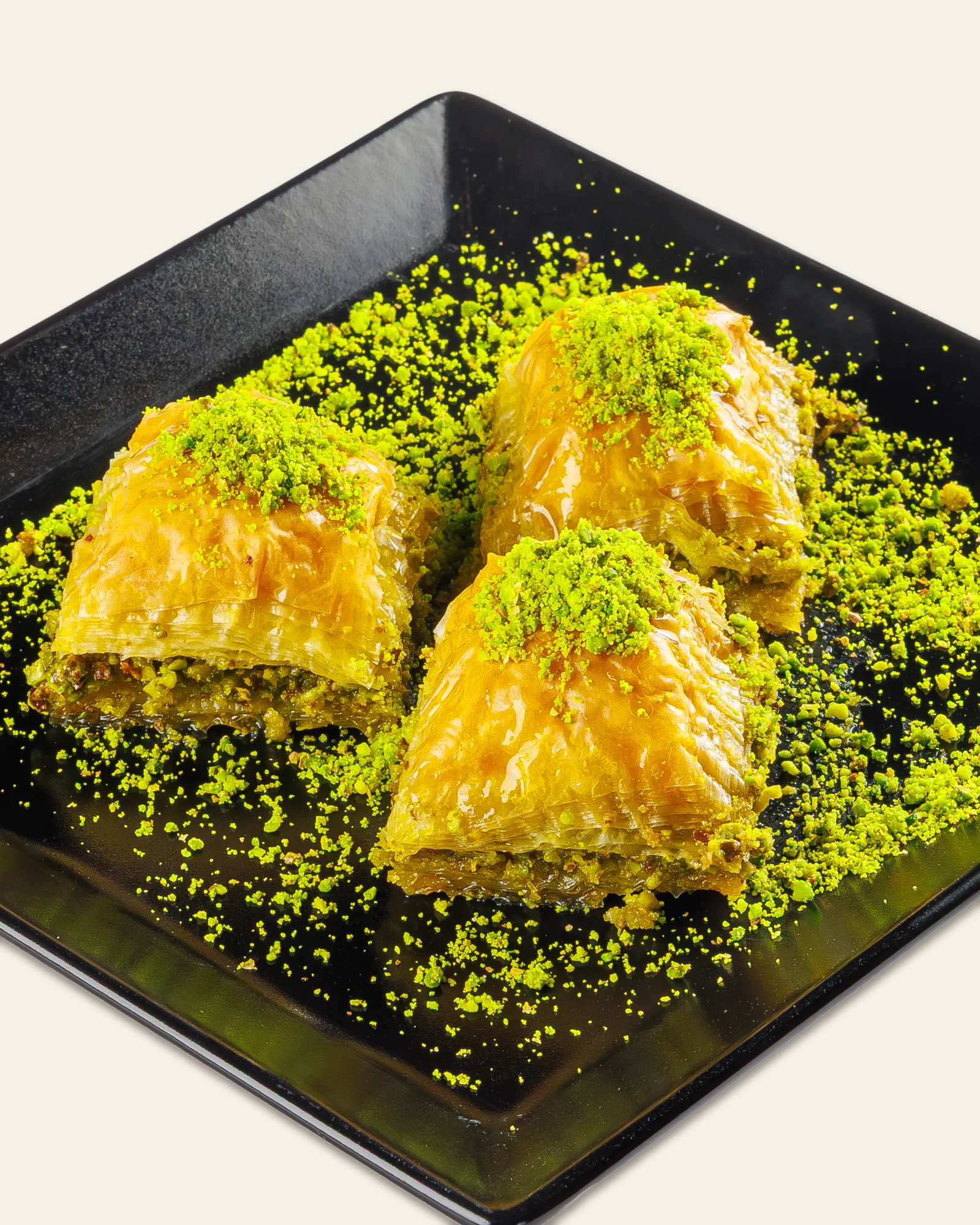
Kuru · the dry one
Dry Baklava with Pistachios
Kuru means “dry”. This baklava gets only a little syrup, so it stays especially crisp and light. If you like baklava less sweet, start here.
With so little syrup it travels well and keeps longer, which is why it has always been the variety people take to relatives far away.
Our tip: A good gift for sending.
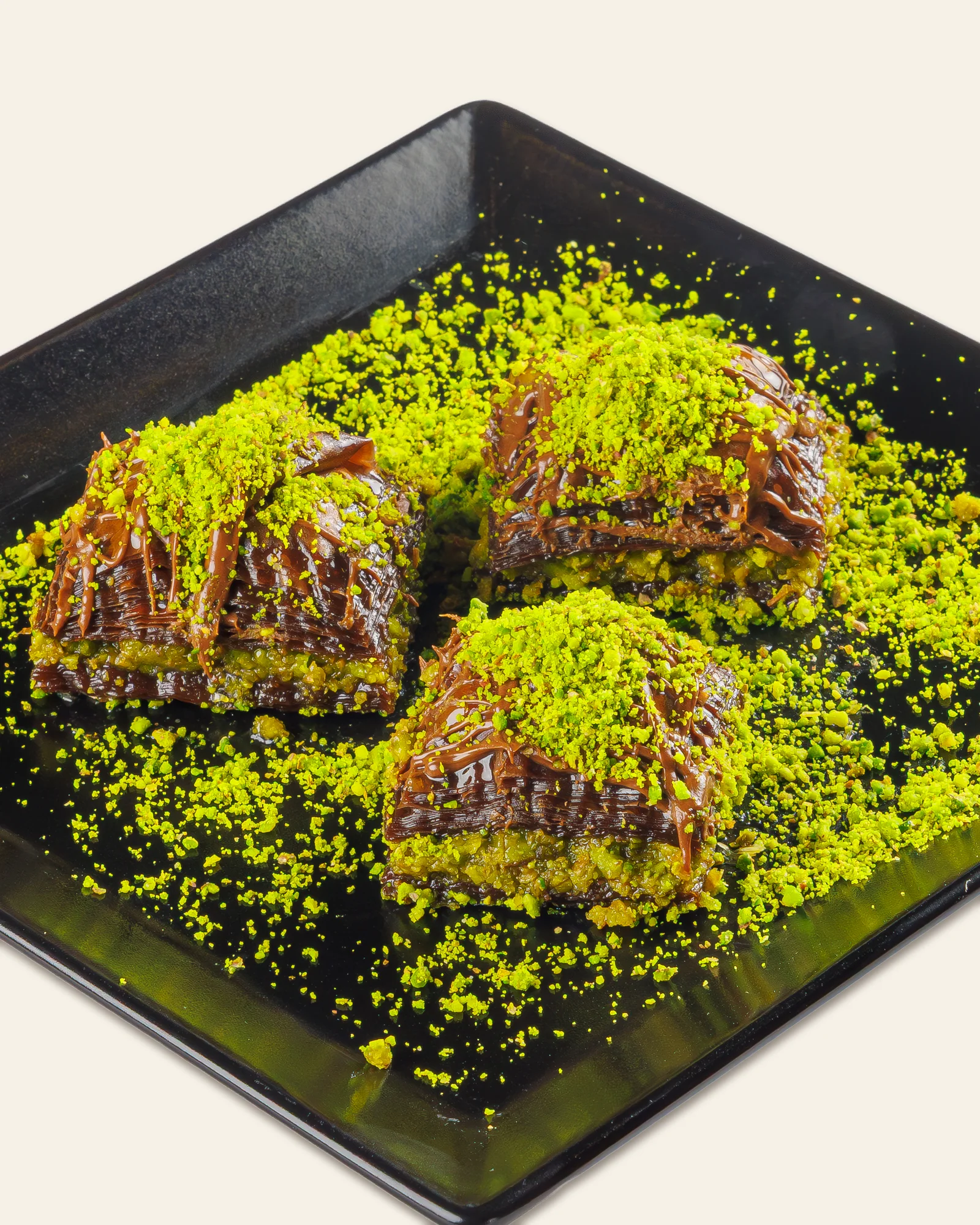
Çikolatalı · the new one
Baklava with Chocolate
The young relative in the tray: classic layers and pistachio, with chocolate added. It is not an old recipe but an answer to today’s taste, and children and adults like it equally.
The chocolate makes the sweetness rounder and a little deeper, while the pistachio stays clear.
Our tip: Try it next to the classic to taste the difference.
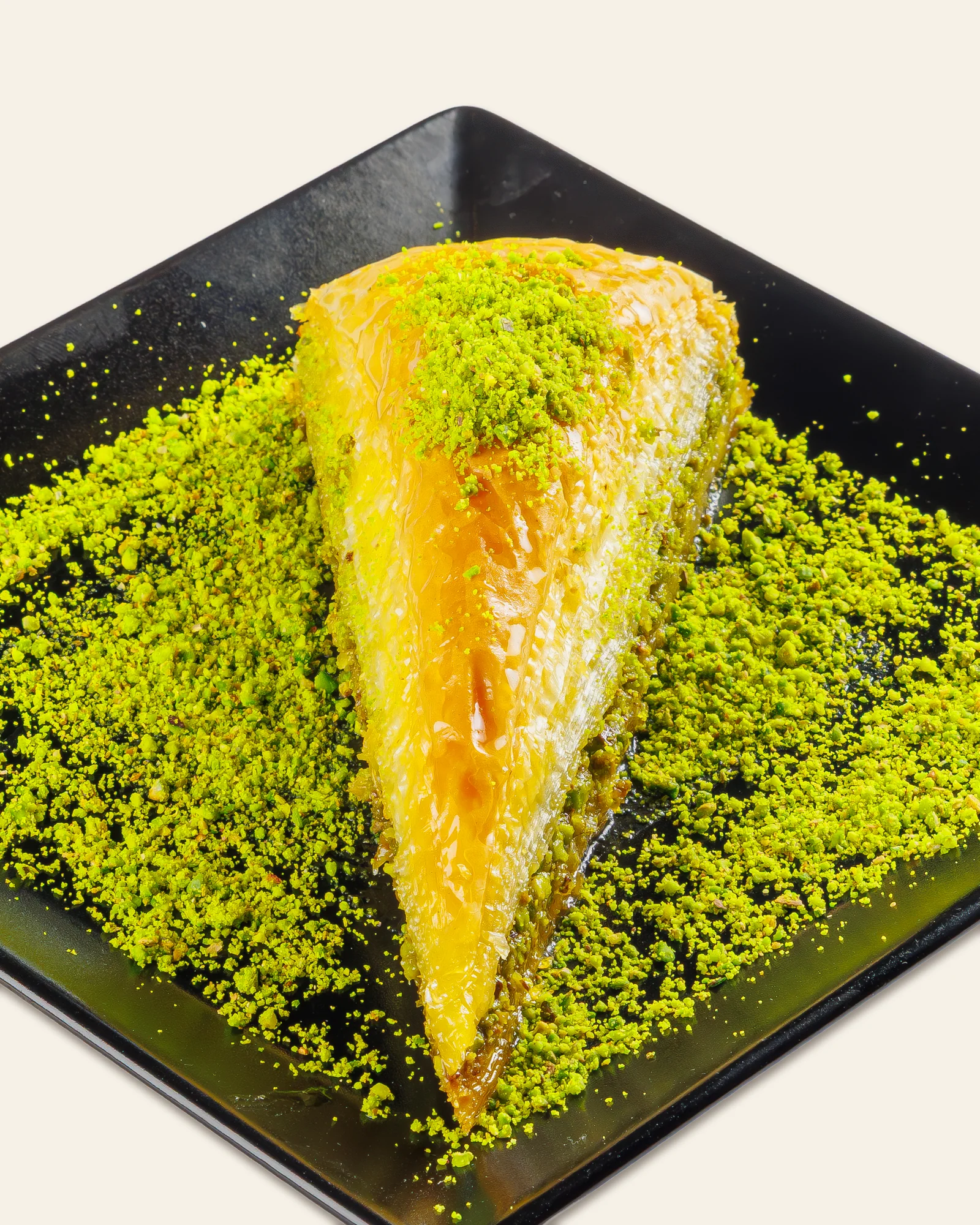
Havuç Dilimi · the carrot slice
Havuç Dilimi
Its name means “carrot slice” and describes its shape: it is cut from the round tray as a long, pointed wedge. It is a Gaziantep speciality rarely found outside the city.
In Gaziantep it is often eaten in the morning, warm from the oven, sometimes with kaymak.
Our tip: Warm it briefly in the oven to bring out its full aroma.
Chapter II
Rolled
Burma means “twisted”, dürüm means “wrapped”. Instead of layering the sheets, the yufka is rolled around a pistachio filling and then cut into pieces.
Rolled varieties have less dough and more filling. That is why they taste more strongly of pistachio and have a firmer bite than layered baklava.
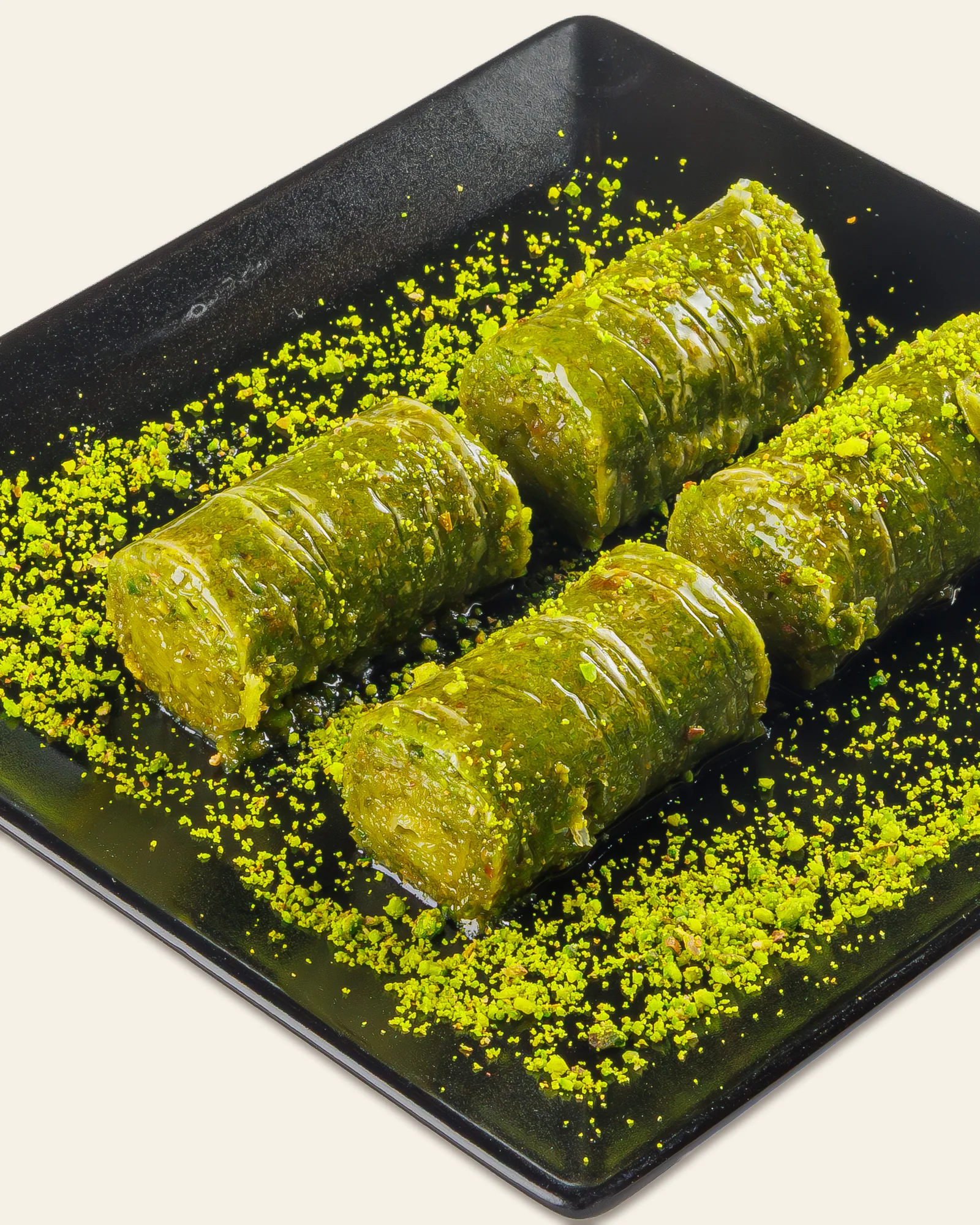
Yeşil Burma · the green one
Yeşil Burma
Little dough, a lot of pistachio: the yufka is twisted thinly around a dense pistachio filling. That is where the bright green you see in the cross-section comes from.
Connoisseurs consider it the most pistachio-rich variety of all: intense, nutty and firm.
Our tip: For anyone who is here for the pistachio.
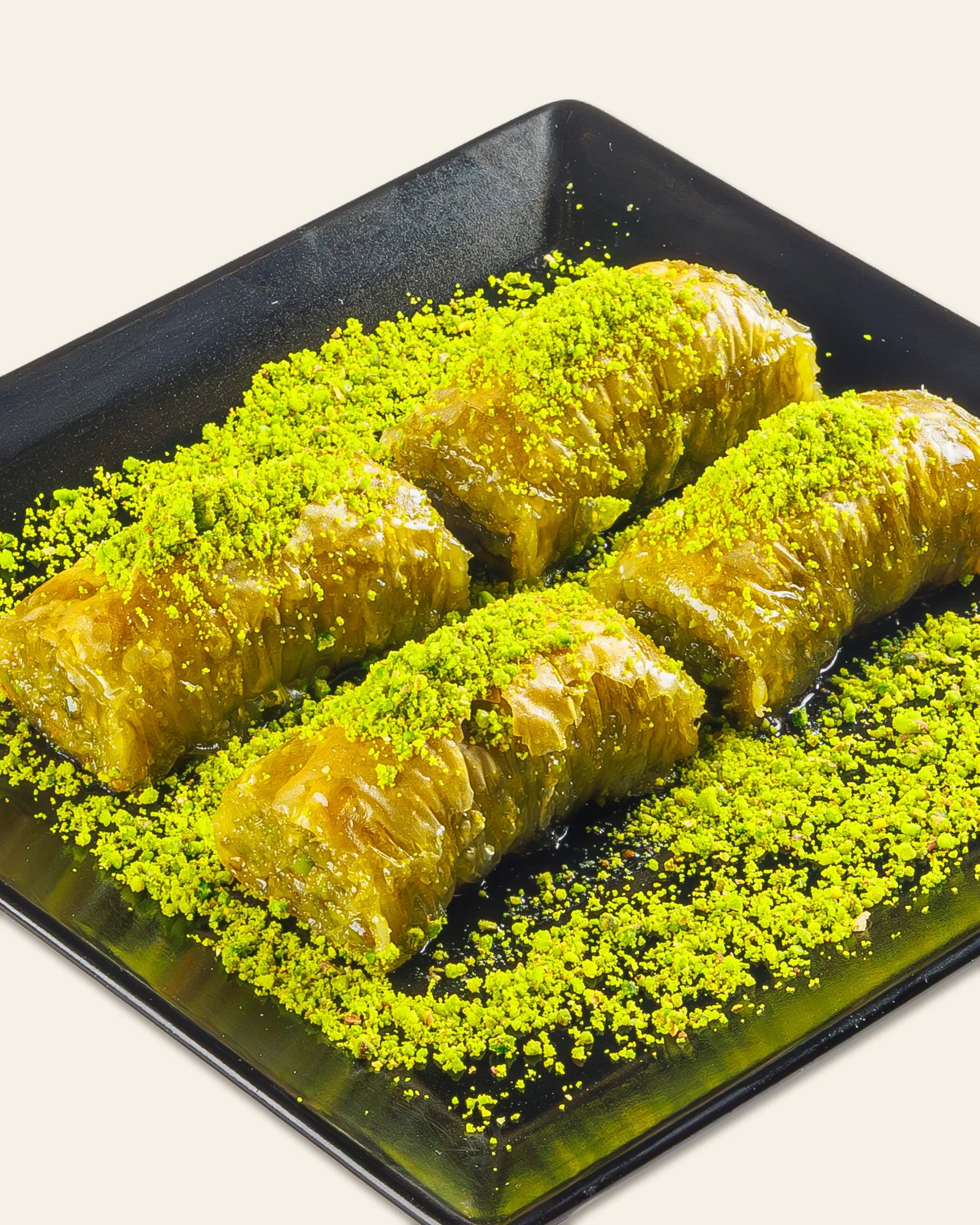
Sarı Burma · the golden one
Sarı Burma with Pistachios
Sarı means “yellow”. Like the green roll it is filled with pistachio, but it is twisted with more dough and baked longer, until it is golden.
It is crisper and a little sweeter than the Yeşil Burma. Two rolls side by side show nicely how much the oven matters.
Our tip: Lovely on a platter together with the green one.
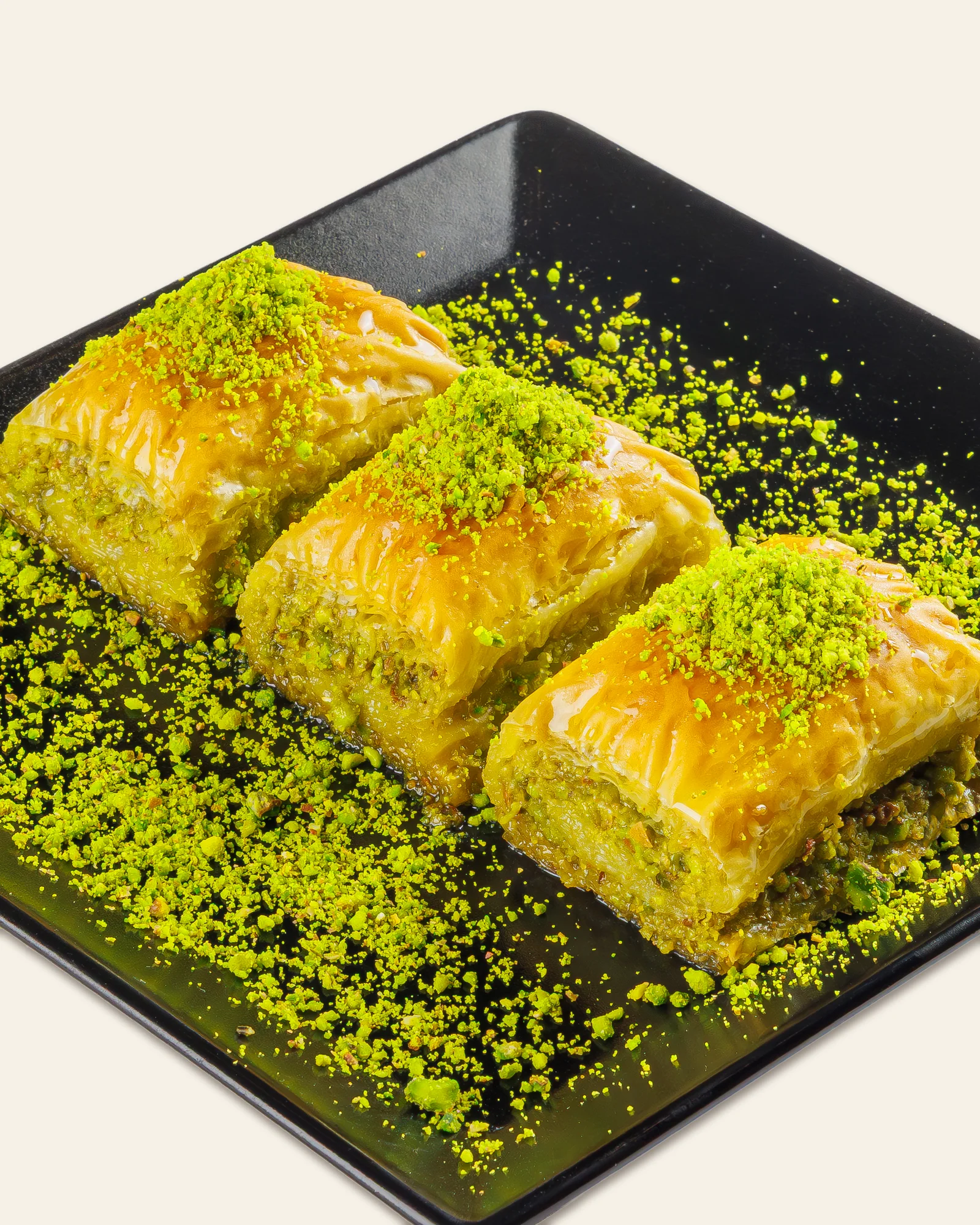
Dürüm · the wrapped one
Dürüm with Pistachios
Dürüm means “wrap”. A sheet of dough is wrapped around a pistachio filling, baked and cut into pieces. The cut shows a spiral of dough and green.
Compact, juicy and very pistachio-forward: somewhere between the roll and the tray.
Our tip: Goes well with a strong Turkish coffee.
Chapter III
From pastry threads
Kadayıf is made by letting a thin batter run through fine nozzles onto a hot, turning plate, where it sets at once into hair-thin threads. This tel kadayıf (“wire kadayıf”) has been part of Turkish desserts since Ottoman times.
Baked with clarified butter and soaked in syrup, it turns crisp outside and juicy inside. That texture is what people love about kadayıf.
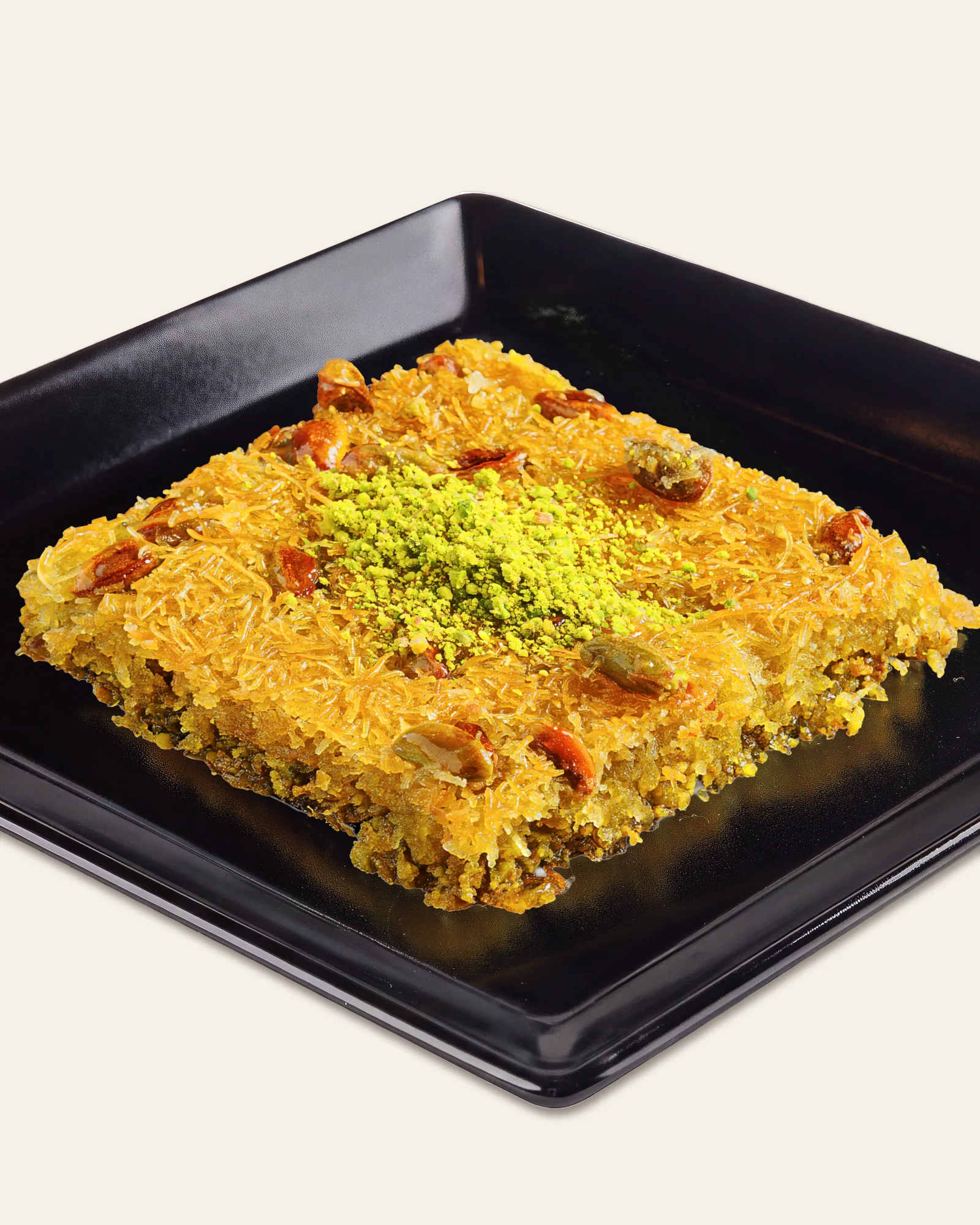
Kadayıf · the thread pastry
Kadayıf with Pistachios
A layer of pistachio sits between two layers of pastry threads. Baked with clarified butter and soaked in syrup, kadayıf turns crisp outside and juicy inside.
It feels quite different from baklava: the threads crunch, and the syrup sits deep in the middle.
Our tip: Best fresh, on the day you buy it or the day after.
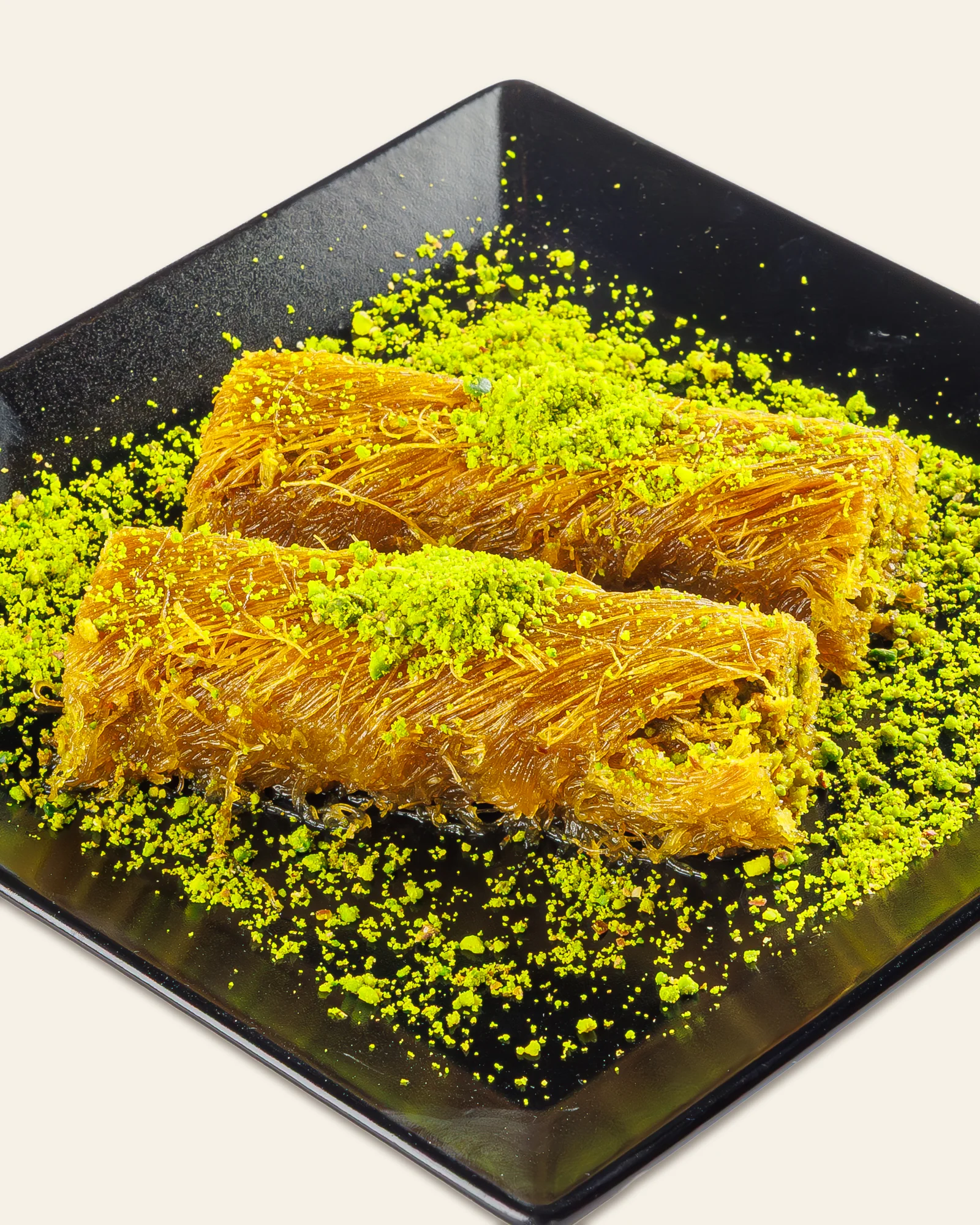
Burma Kadayıf · the thread roll
Burma Kadayıf with Pistachios
Here the kadayıf threads are rolled around a pistachio core and cut into round slices. Every slice shows the green heart.
Firmer and more compact than flat kadayıf, with more pistachio per piece.
Our tip: Looks beautiful on any coffee table.
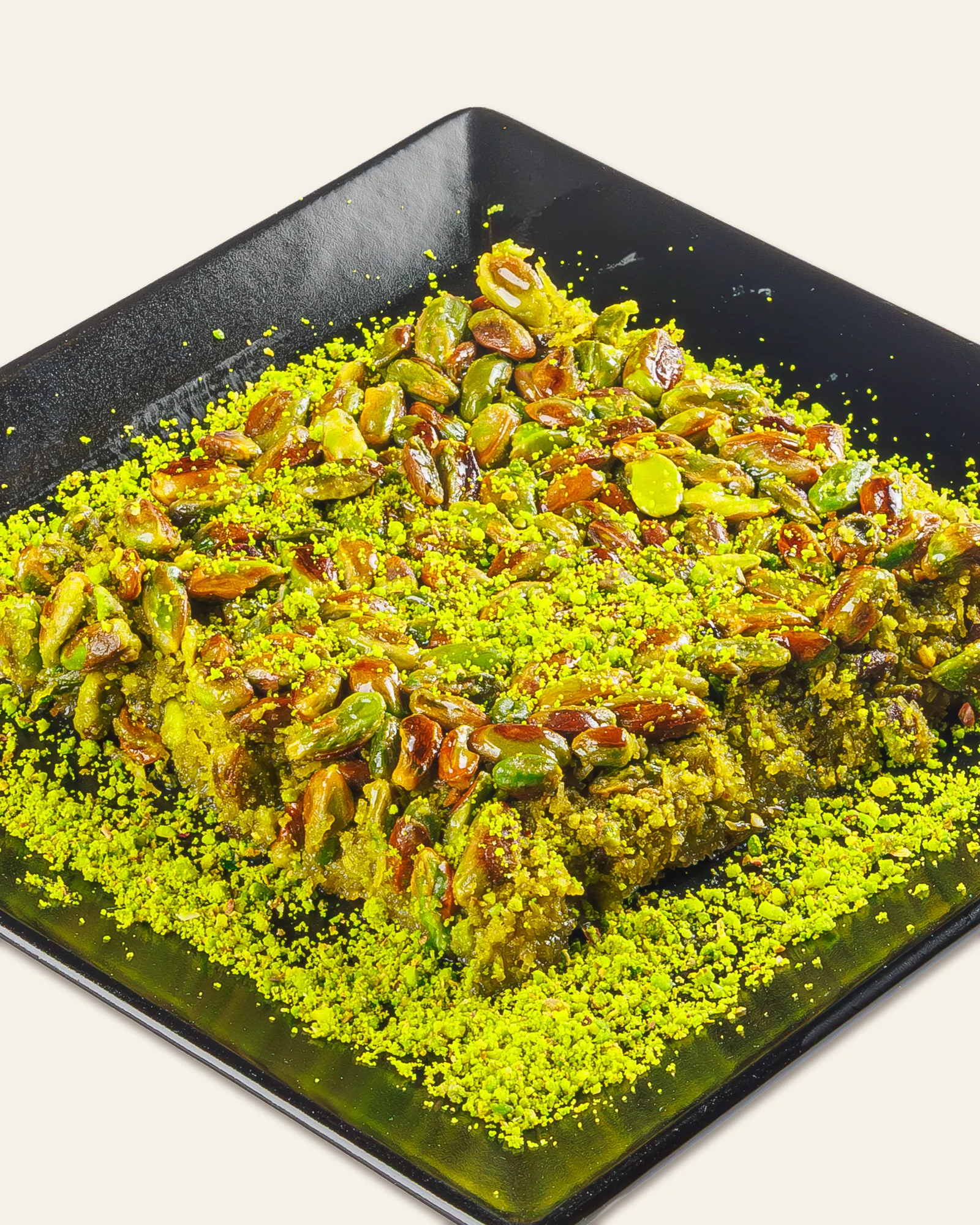
Fıstıkzade · child of the pistachio
Fıstıkzade
The Persian “zade” means “child of”, and the name says it all: finely ground pistachio inside, and on top kadayıf threads mixed with whole, fresh pistachios.
Two textures meet: soft and creamy inside, crisp and nutty on top. It is one of the most generous varieties in our counter.
Our tip: For special occasions, or just for yourself.
Chapter IV
With walnut
Long before the pistachio became Gaziantep’s signature, the walnut was the baklava nut all over Anatolia. In many families, walnut baklava is still the one baked at home.
Walnut tastes milder and slightly bitter. With the syrup this gives a warm, calm sweetness, especially good with strong tea.
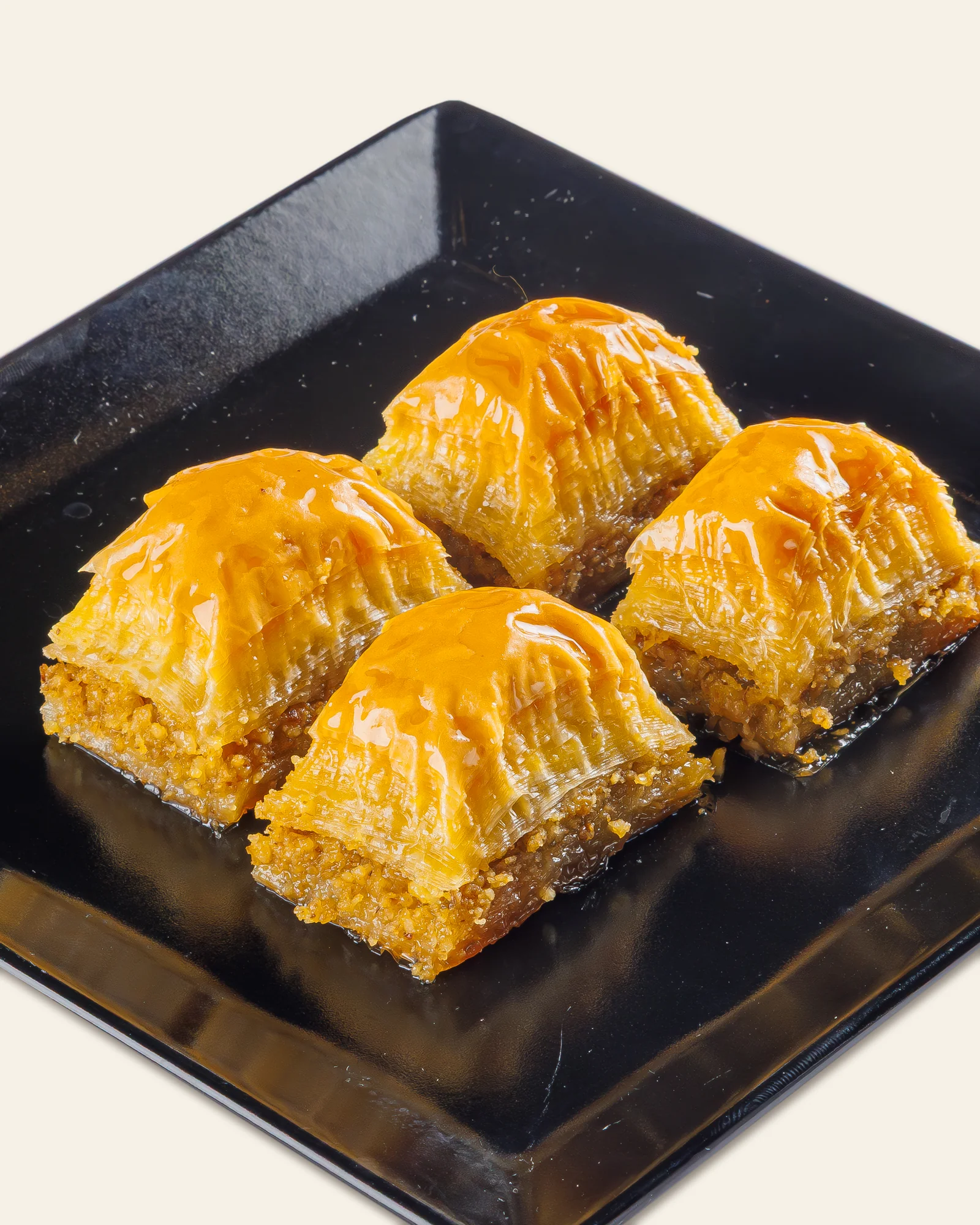
Cevizli · with walnut
Baklava with Walnuts
Baklava as it is known in many parts of Türkiye: layers of yufka with walnut in between, baked in clarified butter and soaked in syrup. Four generous pieces on a plate.
Milder than pistachio, with the slightly bitter note of walnut.
Our tip: The right choice if you prefer walnut to pistachio.
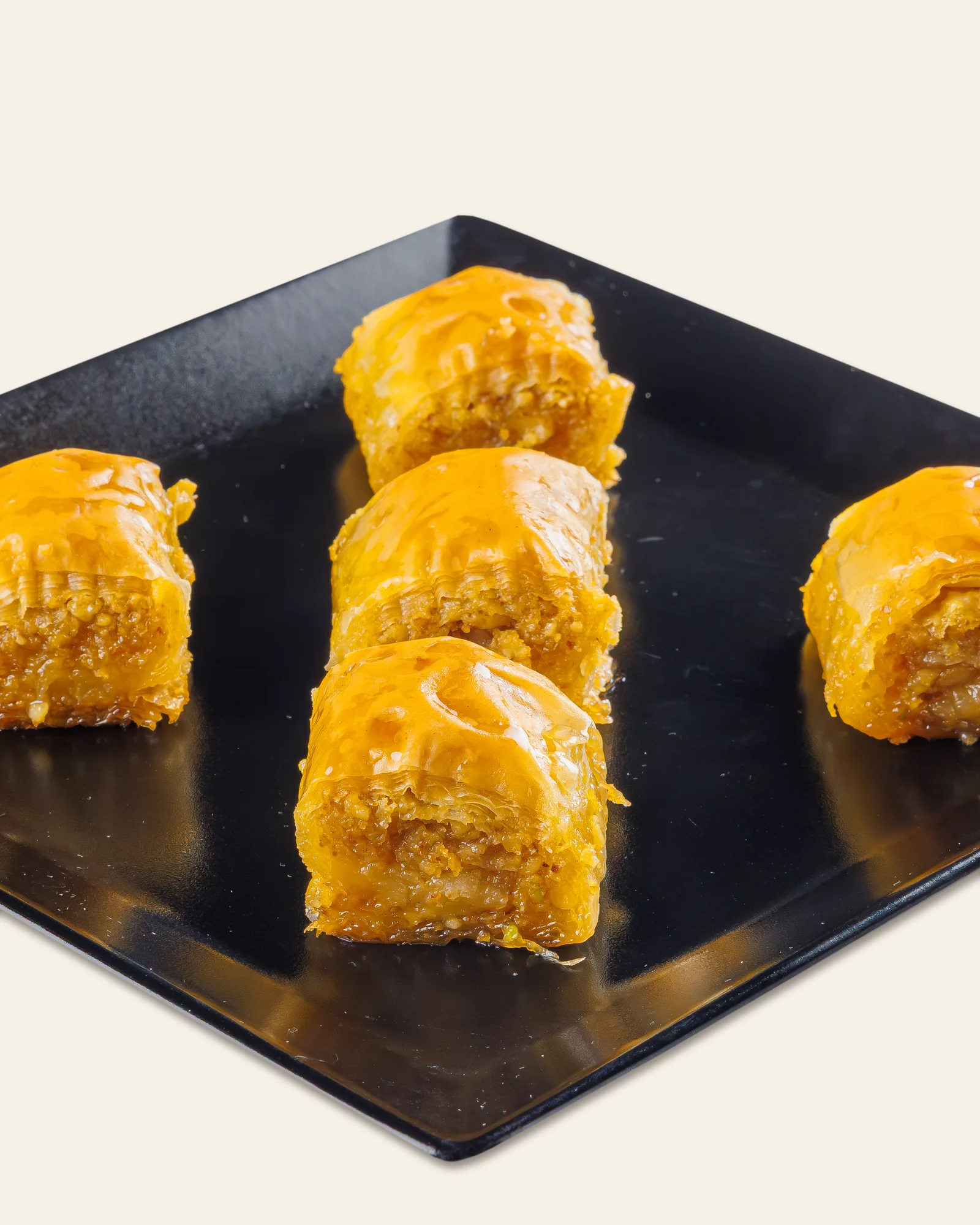
Özel Cevizli · the fine walnut
Special Baklava with Walnuts
The special version of walnut baklava: cut smaller and finer, so five pieces fit on a plate. More walnut and more crust per bite.
As with the pistachio özel, it is all about the ratio of filling to dough.
Our tip: Good for a mixed platter with the pistachio varieties.
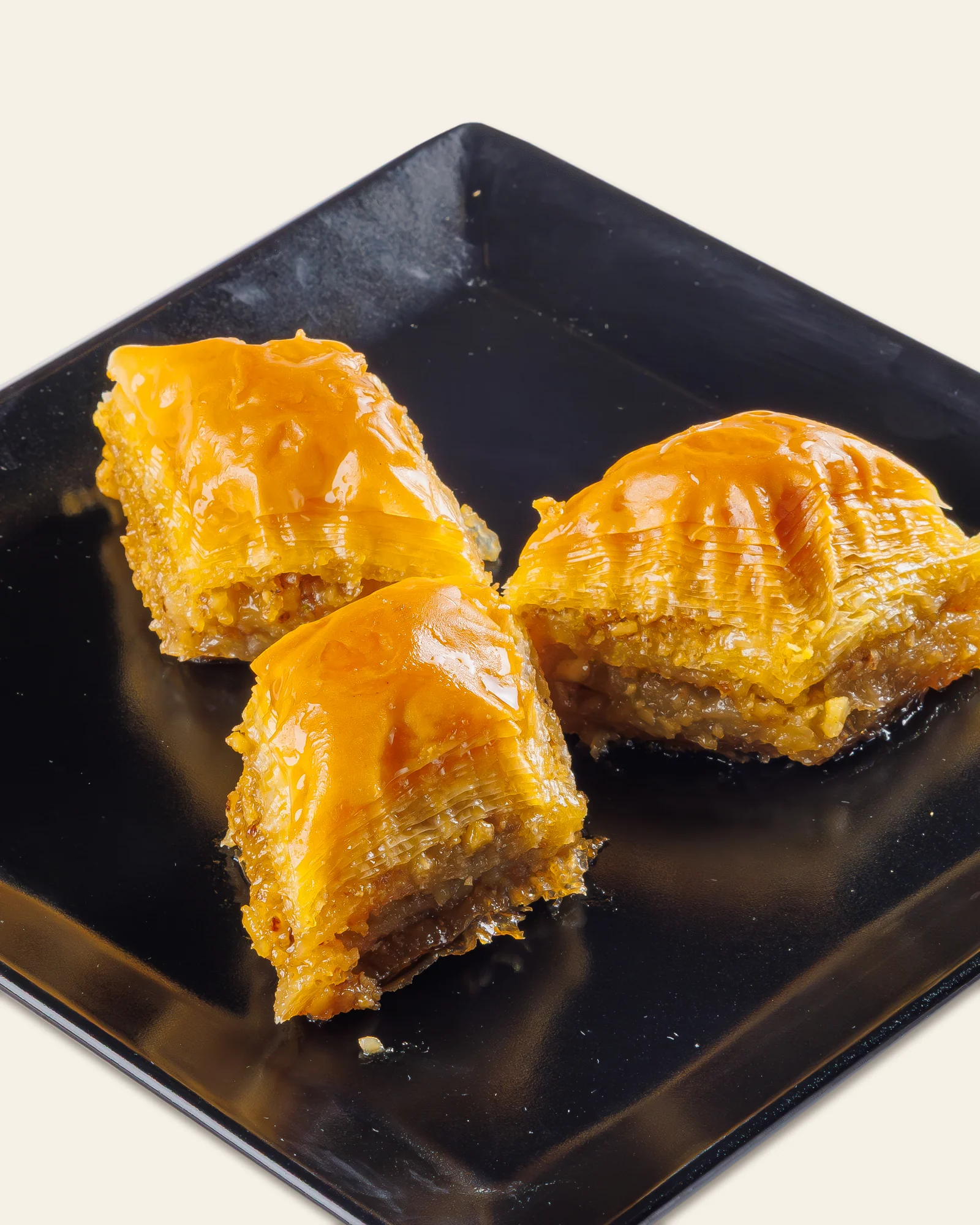
Ev Baklavası · homemade style
Ev Baklavası with Walnuts
Ev baklavası means “baklava from home”. It is juicier than the pastry-shop varieties, with coarsely chopped walnut and cut into diamonds, the way it is baked in Turkish kitchens for Bayram.
Less refined and more heartfelt. For many it tastes like a visit to grandmother.
Our tip: With a glass of cold water or tea, the way it used to be.
A small glossary
Fıstık – Pistachio. Boz fıstık is the grey Antep pistachio with the strongest flavour.
Ceviz – Walnut.
Yufka – Paper-thin sheet of dough, rolled by hand with an oklava (rolling pin).
Şerbet – Sugar syrup poured over the freshly baked baklava.
Sade yağ – Clarified butter, for the oven and for the flavour.
Tepsi – The round copper tray baklava is baked in.
Burma / Dürüm – Twisted / wrapped: the rolled varieties.
Kuru – Dry, with little syrup.
Özel – Special: cut finer.
Kaymak – Thick clotted cream, often served with baklava in Gaziantep.
How to eat baklava
At room temperature, with your fingers, in one or two bites. With Turkish tea or coffee, and a glass of water. Don’t keep baklava in the fridge: the dough goes soft and the syrup sets.
To read more about baklava’s long history, from the palace kitchens to Berlin, see our history page.